Request handling
Validate, authenticate, and rate-limit incoming requests before endpoint actions run.
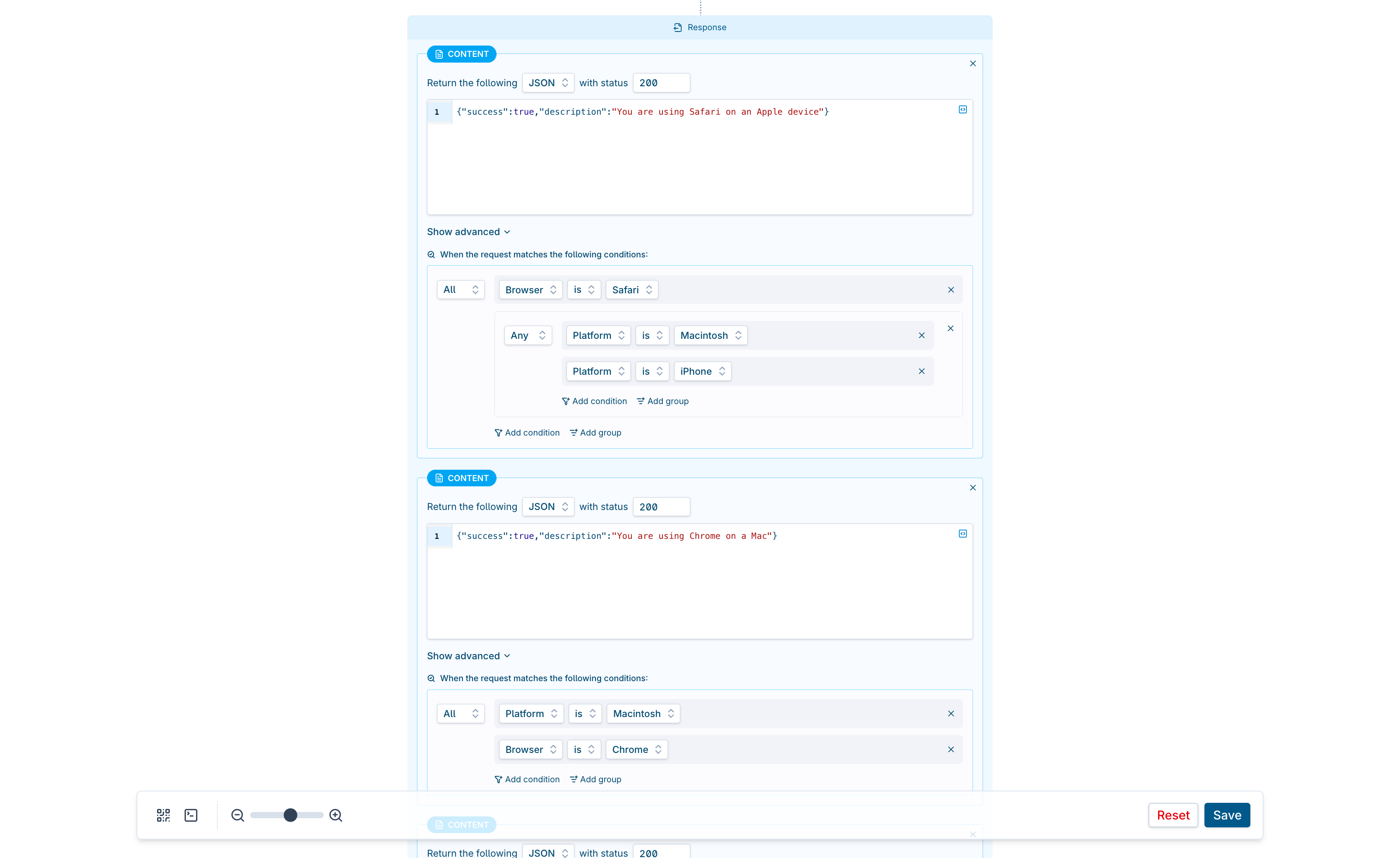
Return content, files, redirects, proxy responses, scripts, or condition-based responses.
Return content, files, redirects, proxy responses, scripts, or condition-based responses.
Response types shape the final contract between an endpoint and its caller. Return structured content, stream a file, redirect a browser, proxy an upstream response, or branch output based on workflow state.
Return structured data, XML, plain text, custom headers, and status codes.
Serve files from connected storage or generated workflow output.
Send callers to another URL with the right redirect status for the flow.
Forward upstream API responses while keeping credentials and routing server-side.
Use custom response logic when static mapping is not enough.
Select the response based on validation, action output, or error state.
Use these features together to build complete endpoint workflows.
Validate, authenticate, and rate-limit incoming requests before endpoint actions run.
Protect public endpoints with basic auth, bearer tokens, query keys, or datastore-backed sessions.
Apply per-endpoint request limits to protect capacity and upstream services.
Verify webhook signatures from known providers or any HMAC-based source.
Everything you need to go from zero to production-ready endpoints.
Sign up, define a URL, and configure auth and validation in a few clicks.
Use the docs to build and test a full endpoint workflow step by step.
Start free, then upgrade for higher limits, advanced features, and team workflows.
Get started with Streamnode and build your first endpoint in minutes.