Machine clients
Use basic auth, bearer tokens, or shared query keys for integrations and server-to-server traffic.
Protect public endpoints with basic auth, bearer tokens, query keys, or datastore-backed sessions.
Protect public endpoints with basic auth, bearer tokens, query keys, or datastore-backed sessions.
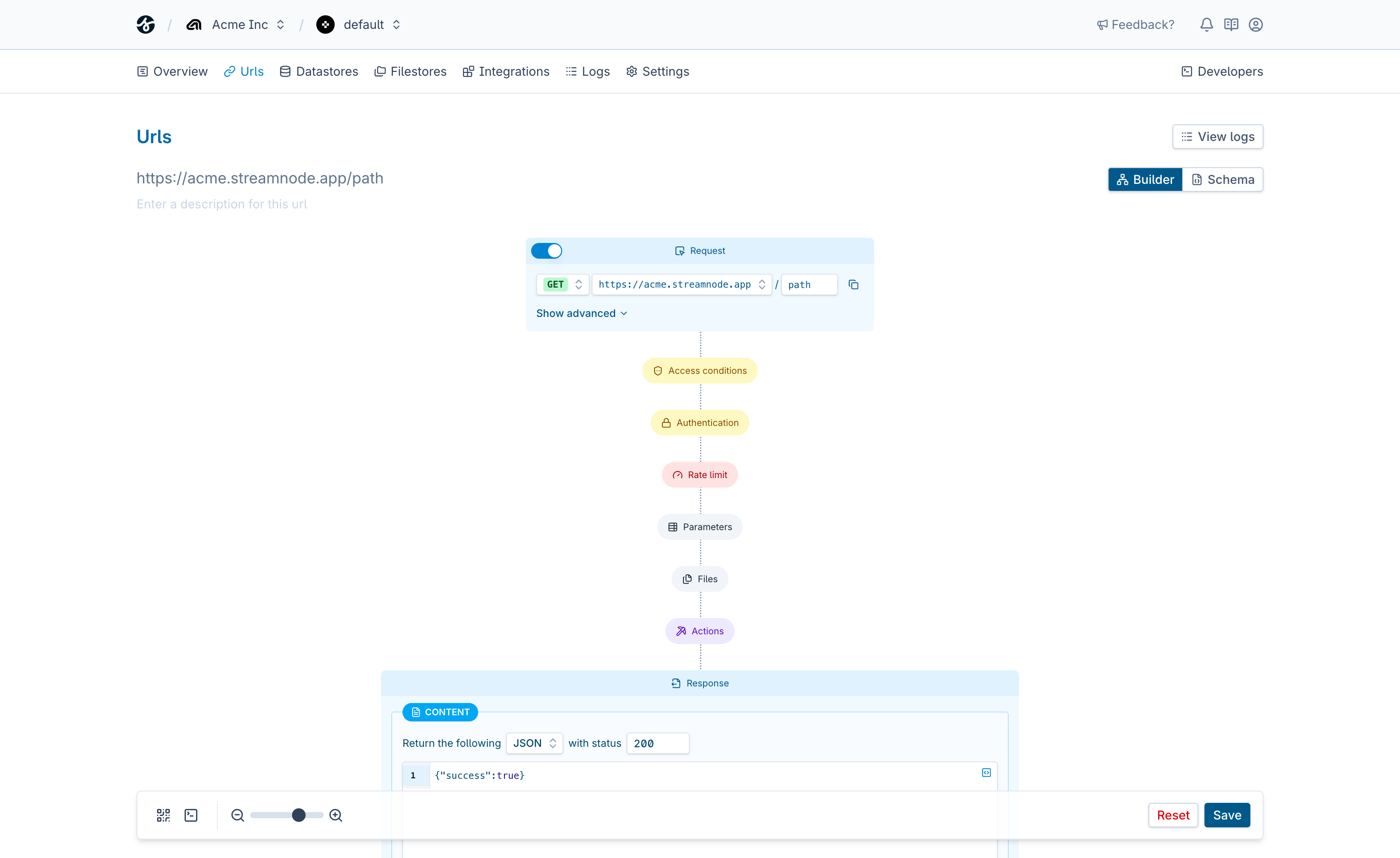
Auth guards let each URL use the access pattern that fits its client: simple shared credentials for machine traffic, bearer tokens for API consumers, query keys for constrained webhook senders, or datastore-backed sessions for user-facing workflows.
Use basic auth, bearer tokens, or shared query keys for integrations and server-to-server traffic.
Back user-facing endpoints with datastore sessions when workflow behavior depends on the current user.
Combine auth with rate limits, signing profiles, and validation for public internet endpoints.
Use these features together to build complete endpoint workflows.
Validate, authenticate, and rate-limit incoming requests before endpoint actions run.
Apply per-endpoint request limits to protect capacity and upstream services.
Verify webhook signatures from known providers or any HMAC-based source.
Validate request data and uploads before actions mutate data or call external services.
Everything you need to go from zero to production-ready endpoints.
Sign up, define a URL, and configure auth and validation in a few clicks.
Use the docs to build and test a full endpoint workflow step by step.
Start free, then upgrade for higher limits, advanced features, and team workflows.
Get started with Streamnode and build your first endpoint in minutes.