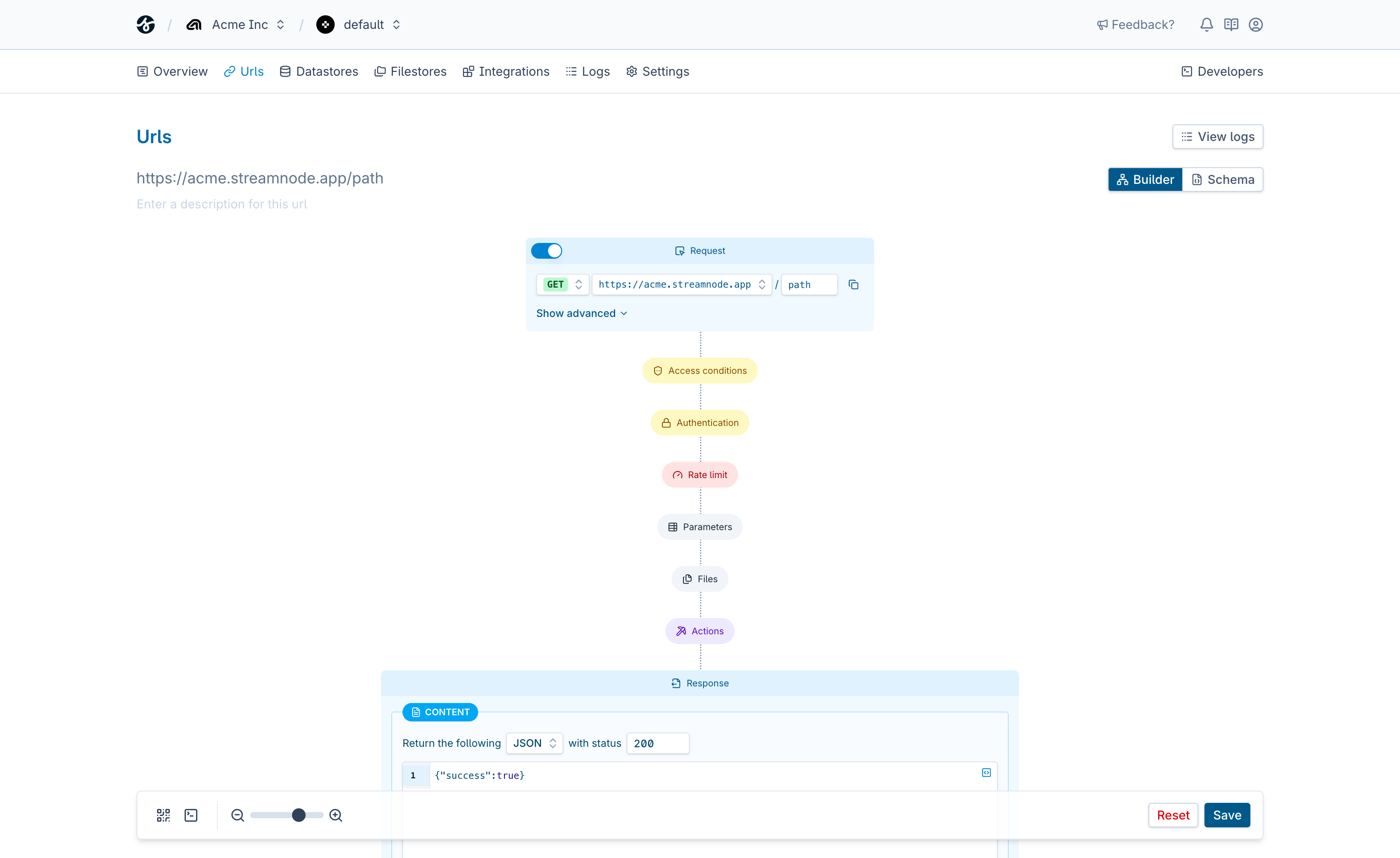
Create your first endpoint
Sign up, define a URL, and configure auth and validation in a few clicks.
Use MySQL as a database for Streamnode APIs, webhooks, and endpoint workflows without writing backend boilerplate.
Open a ready-made Use MySQL as a database template in Streamnode, then customize the request, actions, and response for your project.
Plug datastore connections into endpoint workflows and keep request validation, auth, and response contracts in one place.
Connect once, then reuse across API and webhook routes.
Check auth and input shape.
Read or mutate database records.
Return stable HTTP payloads.
Everything you need to go from zero to production-ready endpoints.
Sign up, define a URL, and configure auth and validation in a few clicks.
Use the docs to build and test a full endpoint workflow step by step.
Start free, then upgrade for higher limits, advanced features, and team workflows.
Start with a URL, add validation and actions, then ship the response your clients need.